
Olive Oil and Wine in the Tuscia: A Harvest-Season Day Trip from Rome or Civitavecchia
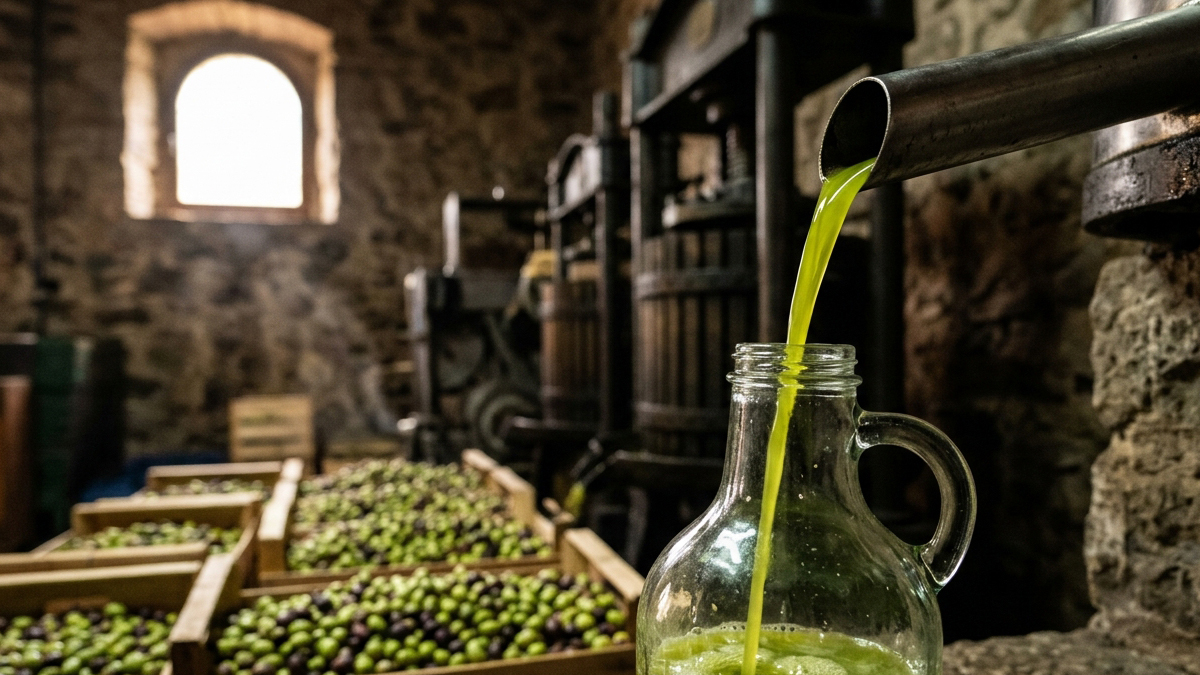
Fresh oil coming off the press does not taste like the oil in your kitchen. It is cloudy and bright green, it smells of cut grass and artichoke, and about two seconds after you swallow it catches the back of your throat and makes you cough. Italians treat that cough as a quality marker. It is the polyphenols, and it fades within months.
Which is the whole point of this trip, and the reason an olive oil tasting tour near Rome is not a year-round proposition. For roughly six weeks between late October and early December, the mills of the Tuscia — the old Etruscan country north of Rome — are running day and night. Outside that window they are locked, and what you taste is last season's oil out of a bottle.
Why the calendar decides this trip
Olive milling is not a visitor attraction that happens to be seasonal. It is agricultural work with a hard deadline: olives must be pressed within hours of picking or the oil oxidises. During harvest a frantoio runs continuously, and the whole village smells of it.
Several Tuscia towns open their mills to visitors during these weeks under the banner Frantoi Aperti — mills open. The circuit centres on Canino, Blera, and Vetralla, and typically runs on autumn weekends from the end of October. Visitors watch the milling in progress, taste the oil as it comes out, walk in groves that have been worked for centuries, and eat in restaurants running oil-themed menus for the season.
Dates shift with the harvest, which shifts with the weather. Check this season's calendar locally before you commit to a date — there is no fixed annual schedule.
Canino DOP: why this oil has a name
Canino is a small town inland from the coast, and its oil carries a protected designation of origin. Canino DOP is made predominantly from the Caninese cultivar, and the profile is firmly on the assertive end: green, bitter, markedly peppery. It is not a delicate oil. Poured over grilled bread with nothing else on it, it is the entire dish.
The wider Tuscia DOP designation covers a larger area of the Viterbo province and tends to produce something slightly rounder. Tasting the two side by side in the same morning is the clearest education in olive oil most people will ever get, and it costs nothing beyond the price of lunch.
One practical note that catches visitors out: a working mill during harvest is a workplace, not a tasting room. Staff are moving crates and running machinery. Call ahead, arrive when you said you would, and expect the visit to be generous but brisk. The Tuscia Welcome territorial portal lists producers and seasonal events for the area.
The wine half of the day
The Tuscia grows wine on volcanic soil around Lake Bolsena, and two appellations are worth the detour.
Est! Est!! Est!!! di Montefiascone is a white DOC with the most-told name in Italian wine. The legend involves a bishop's servant sent ahead to mark good inns with the word est, who found the wine at Montefiascone so good he wrote it three times. The wine is dry, mineral, and built for the lake's fish rather than for ageing. The Cantina di Montefiascone, a cooperative in the town, receives visitors.
Aleatico di Gradoli is the one to seek out if you like sweet reds. Gradoli is a village on the western shore of Lake Bolsena, and the Aleatico grape there produces a dark, perfumed, moderately sweet wine made in small quantities. It is poured at the end of a meal with dry biscuits, and it is almost impossible to find outside the province.
Pairing the two halves of the day works because they share a landscape: the same volcanic soil that gives the oil its pepper gives the wine its mineral edge.
A realistic route for one day
Do not try to cover the whole province. The Tuscia is larger than it looks on a map and the roads are narrow, winding, and slow in the best possible way.
From Civitavecchia, the practical loop runs north to Canino for a mill visit in the morning, then inland and east towards Montefiascone and Lake Bolsena for lunch and a cellar in the afternoon. Each leg is roughly an hour of driving.
From Rome, the drive north is longer — allow around an hour and a half to Montefiascone — so the order reverses. Lake Bolsena first, the mills on the way back down.
Either way, build the day around two stops, not four. A mill visit with a proper tasting takes an hour. Lunch in the Tuscia is not a thirty-minute affair, and treating it as one defeats the purpose.
Can this fit into a cruise port day?
Honestly: it is tight, and it depends on your ship.
With eight hours ashore and an early disembarkation, Canino and a single mill are comfortably achievable from Civitavecchia with time for lunch. Adding Lake Bolsena to the same day makes it a long drive with a hard all-aboard deadline at the end — possible, but you will spend a lot of the day in the car.
With six hours or fewer, choose one: the mills or the lake. And remember that November is a quieter month at the port, which means fewer ships, shorter shuttle queues at Largo della Pace, and roads that are genuinely empty compared to August.
The deciding factor is the return margin. Public transport does not serve this itinerary in any useful way — there is no train to Canino, and the bus network is built for residents, not day trips. A driver who knows the all-aboard time and the roads back is the difference between a relaxed afternoon and watching a clock.
Reach the Tuscia comfortably with a private driver from Civitavecchia or Rome
TK Limo Service runs private day trips through the Tuscia with licensed English-speaking drivers, Mercedes vehicles for up to four or up to seven passengers, fixed pricing with tolls included, and ship tracking for cruise passengers working to an all-aboard deadline.
See our private tours, our Civitavecchia port transfers, or message +39 328 123 0555 on WhatsApp with your date and the hours you have available, and we will build the route around them.
Frequently asked questions
When is the olive harvest in the Tuscia?
Picking and milling run from late October into early December, with the peak through November. This is the only period when mills are pressing and fresh oil can be tasted straight from the press. Exact timing shifts each year with the weather.
What is Frantoi Aperti?
A seasonal circuit in the Viterbo province during which working olive mills open to visitors. It centres on Canino, Blera, and Vetralla, usually on autumn weekends from late October, and includes guided tastings, walks in old groves, and oil-themed menus in local restaurants.
How far is Canino from Civitavecchia?
Roughly an hour's drive north of the port, inland from the coast and into the Viterbo province. There is no direct train service to Canino, and local buses are timetabled for residents rather than visitors, so the trip realistically requires a car or a private driver.
What makes Canino DOP olive oil different?
It is made mainly from the Caninese cultivar and carries a protected designation of origin. The profile is assertive — green and grassy, distinctly bitter, with a peppery finish that catches the throat. That pepper indicates high polyphenol content and fades as the oil ages.
Which wines should I taste in the Tuscia?
Est! Est!! Est!!! di Montefiascone, a dry mineral white grown on volcanic soil near Lake Bolsena, and Aleatico di Gradoli, a sweet perfumed red made in small quantities on the lake's western shore. Neither travels widely, which is the argument for tasting them here.
Can I do this trip on a cruise port day from Civitavecchia?
With eight hours ashore, a mill visit near Canino plus lunch works comfortably. Adding Lake Bolsena makes for a long day with a fixed all-aboard deadline. With six hours or fewer, choose either the mills or the lake rather than both.
Do I need to book a mill visit in advance?
Yes. Mills during harvest are working businesses running at capacity, not visitor centres with fixed opening hours. Call or email ahead to arrange a time, and confirm again a day or two before, since the milling schedule follows the picking.